Daughters in the Field
Mary Willis
Daughters in the Field
Mary Willis
. . . Sufficient light . . . she turned the manuscript’s pages. The colors were subdued, naturally, and they had a transparency they had not possessed in daylight, the transparency of a rainbow.
They manifested that clear, shining quality, and it was as if she were seeing them through a medium that, like space, had its own transparency. And dimension. Why had this three-dimensional feature not caught her attention earlier? Each illumination seemed to stand out rainbowlike from the parchment, and she could not gauge its distance from either the page or herself. Within each illumination, too, three dimensions danced. Yes, she could almost see movement in the illumination of the tree in the garden, as though a wind had stirred the leaves and grass. And hadn’t that bird, the one near the top of the tree, been more deeply hidden? . . .
. . . She felt on the back of her neck the shivery, mothlike brush that told her she was uneasy. It was as if the whole time she had been examining the book, someone had stood not five feet away reading her.
~from Daughters in the Field, by Mary Willis, © 2015
For both Hannah Wentworth, a bookshop owner in a small New England town, and her daughter Julia, a student eagerly undertaking an environmental internship in Hawaii, the guardianship of an unusual Ethiopian illuminated manuscript brings about an awakening, a questioning of everyday choices; the manuscript becomes the start of a journey that leads them into dangerous territory extending beyond physical boundaries. Daughters in the Field is a novel exploring the light and the dark forces contending for its characters' hearts and lives.
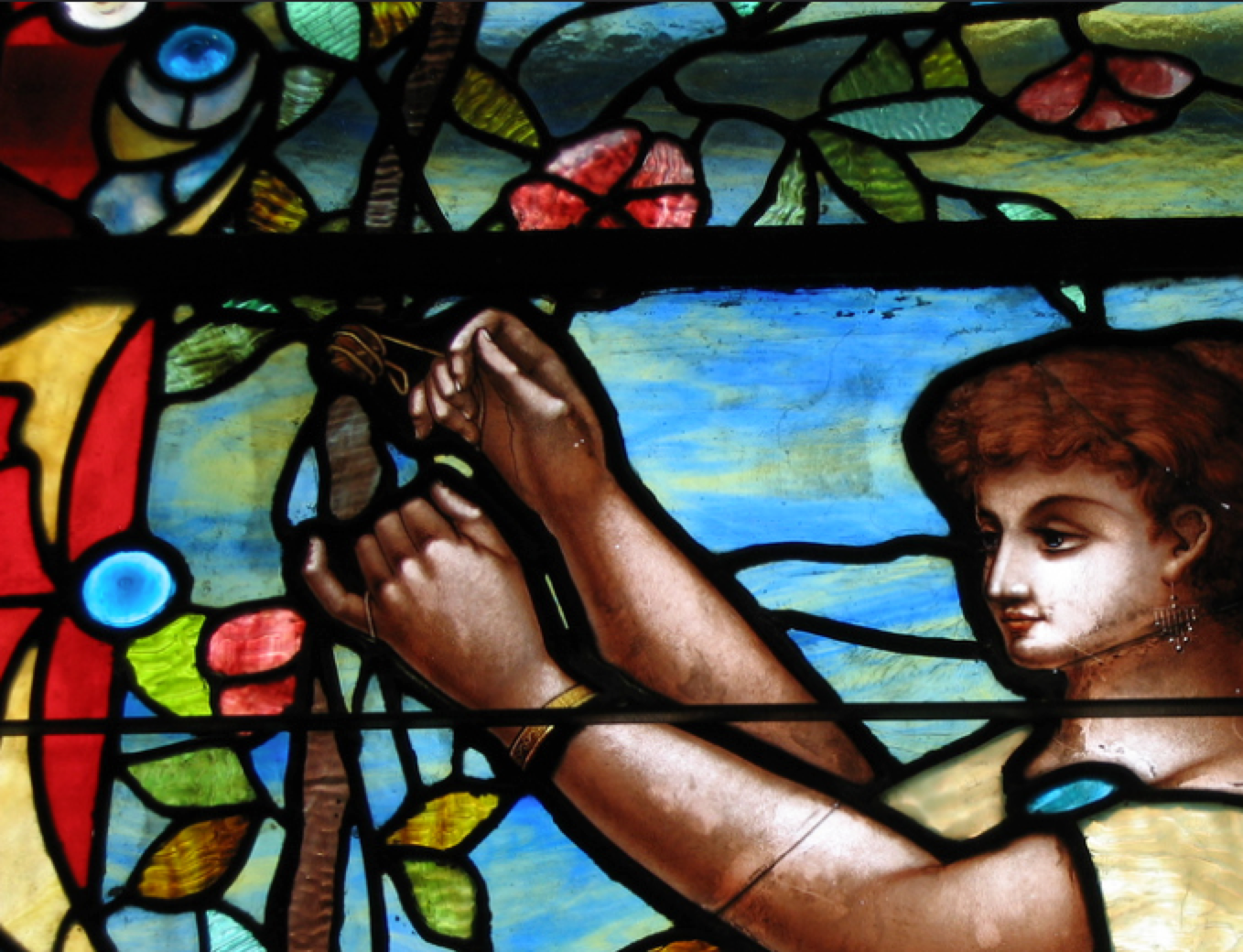
Tiffany Window (1889) in Mary Willis Library, Washington, Georgia
Photo by UGArdener (Flickr)
Something Rare
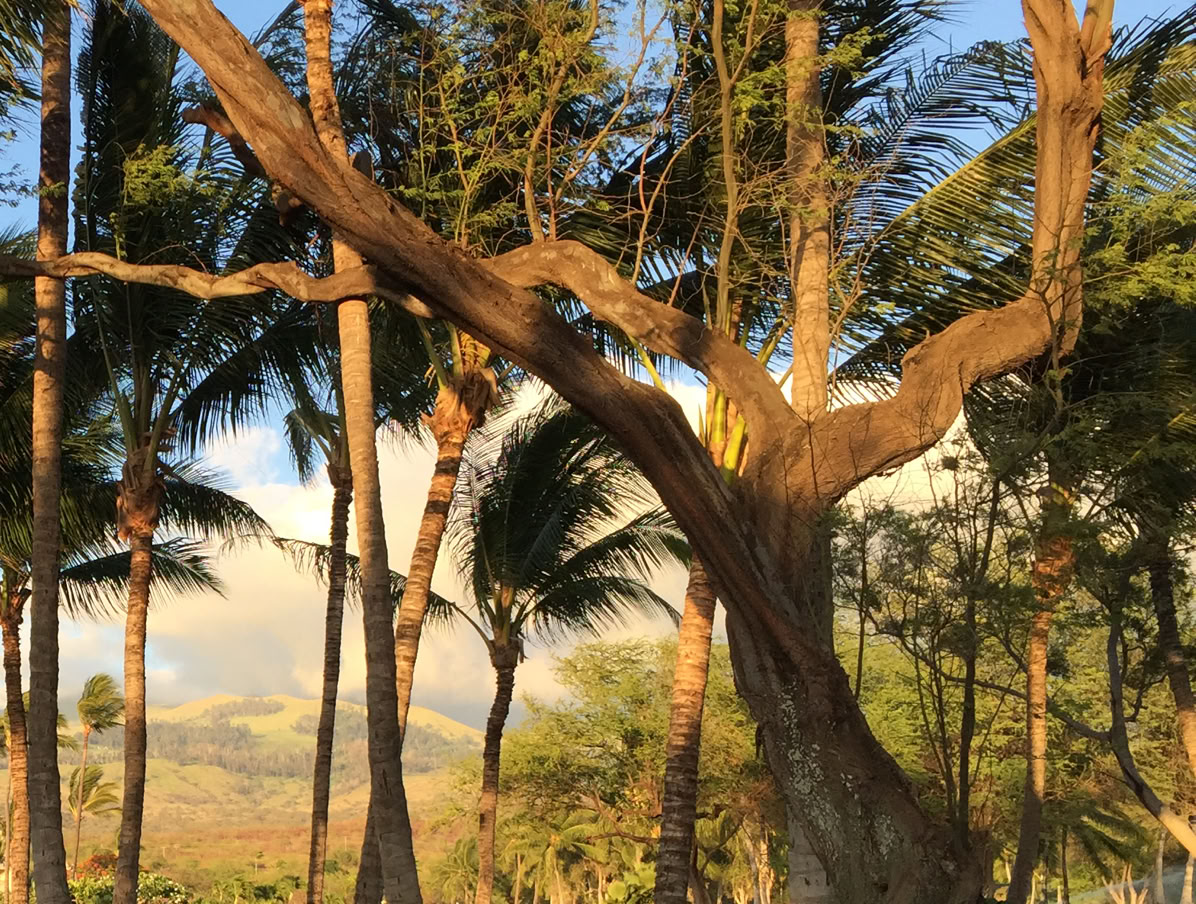
While other trees are motionless
coconut palms still sway
as if they were underwater.
Surely no element as thin as air,
as common as simple welfare
supports them—
it must be something rare.
When a trade wind blows
we almost see what it is
but the coconut palms are
so many whirling things,
like quick-change artists
yet all at once
they are marine-green waterspouts,
tall-stemmed tornados,
open orbits of long leaves
and suns revolving two-edged swords,
flashing colors impossible to catch—
quicksilver? depthless gold?
They are keener, brighter gifts
than we expect
from day’s rays
and who can tell,
they may reflect
the colors that light held
when it was first
called into life.
The wind is stronger now,
blows the coconut palms so low
toward ground, we fear the worst,
but they do not depend
like other trees on solid trunks
and deep taproots, they send
their roots out sideways
searching far and wide
for watershine, they tend
to bend in heavy wind.
They look like perfect question marks
against a flying page of sky, they pose,
one after another taking
a momentary place, composed
for something more
by someone else
and we follow
line by clear line,
keeping them in sight, wind-blown
by words not our own.
~from Carved Cherubim and Palm Trees, by Mary Willis, © 2016